Common Mistakes New Homeowners Make in High-End Furniture Selection
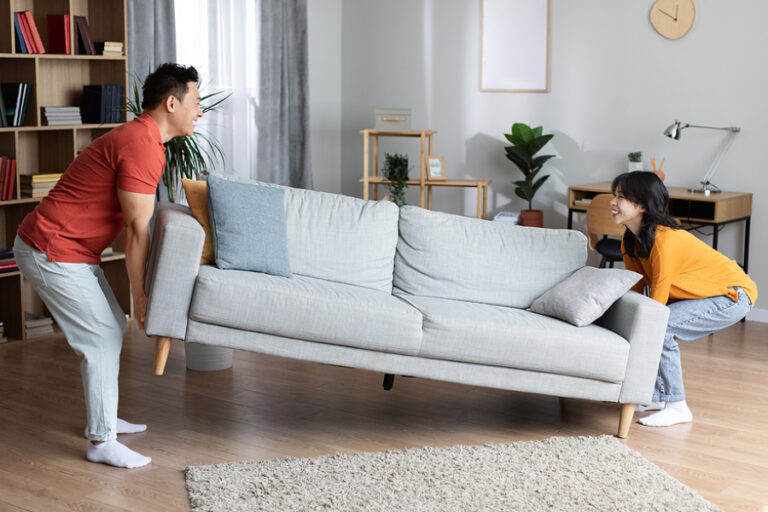
Professional insights into typical errors new homeowners make when choosing luxury furniture and how to avoid costly missteps.
New homeowners frequently make avoidable mistakes when selecting high-end furniture, not because of poor taste or insufficient budget, but due to a lack of experiential reference and strategic framework. The transition into homeownership places individuals in a psychologically charged environment where furniture decisions are burdened with expectations of permanence, identity, and perceived success. Within this context, common errors such as misjudging spatial proportion, prioritizing appearance over performance, neglecting maintenance responsibilities, and relying excessively on sales narratives can significantly undermine long-term comfort, functionality, and investment value.
The Inexperience Gap in High-End Furniture Selection
First-time homeowners often enter the luxury furniture market without an internal benchmark for evaluating quality beyond surface aesthetics. Showroom environments present idealized conditions—ample space, controlled lighting, curated layouts—that rarely reflect real residential constraints. Without experience translating these displays into lived environments, buyers struggle to assess scale, circulation impact, and ergonomic suitability. This inexperience gap makes otherwise rational individuals susceptible to decisions that feel correct in isolation but fail in context.
Ignoring Spatial Proportion and Circulation Logic
One of the most damaging mistakes is purchasing furniture without rigorous evaluation of room proportions and circulation paths. Furniture that technically fits within a room may still disrupt movement, compress sightlines, or create visual congestion. When circulation widths fall below functional thresholds, daily routines become subtly stressful, even if the space appears visually appealing.
Professionals address this by treating furniture as spatial infrastructure rather than decorative objects. Scaled floor plans, clearance standards, and mock layouts reveal conflicts before purchase. Without these tools, homeowners frequently compensate post-installation by rearranging, removing, or tolerating discomfort—outcomes that erode both satisfaction and perceived luxury.
Aesthetic Dominance Over Ergonomic and Structural Performance
Visual appeal is a powerful motivator, particularly for new homeowners eager to establish a cohesive identity. However, overemphasizing aesthetics often leads to compromised ergonomics and material performance. Sculptural seating with insufficient back support, visually light tables lacking structural rigidity, or fashionable finishes unsuited to daily use are common examples.
High-end furniture distinguishes itself not through appearance alone, but through how it performs under repeated stress. Seat depth, cushion density, frame construction, and joinery methods determine whether furniture supports the body comfortably over hours and years. When these factors are overlooked, the initial visual satisfaction quickly gives way to physical fatigue and functional dissatisfaction.
Underestimating Maintenance and Ownership Responsibility
Luxury materials demand informed care. New homeowners frequently assume that high-end furniture is inherently resilient and low-maintenance, when in reality it requires disciplined upkeep. Natural woods respond to humidity, leathers age according to conditioning routines, and premium fabrics reveal wear patterns when neglected.
Failure to understand maintenance obligations accelerates degradation and shortens usable lifespan. This disconnect often leads homeowners to incorrectly attribute wear to product failure rather than ownership practices. Professionals emphasize that maintenance is not an optional add-on, but an integral component of long-term value preservation.
Overreliance on Sales Narratives and Brand Authority
Retail environments are designed to guide emotional decision-making. Brand heritage, storytelling, and visual staging create a perception of authority that can overshadow objective evaluation. While reputable brands often uphold standards, brand recognition alone does not guarantee durability, repairability, or ergonomic suitability.
New homeowners who rely exclusively on sales guidance may overlook critical details such as frame material, joinery method, replacement part availability, or reupholstery potential. Independent assessment—asking technical questions, comparing construction details, and understanding lifecycle implications—restores balance between emotional appeal and rational scrutiny.
Limited Consideration of Long-Term Adaptability
Another frequent oversight is treating furniture as static rather than adaptable. Life circumstances evolve: household size changes, work-from-home patterns emerge, and spatial priorities shift. Furniture that lacks modularity, neutral foundations, or renewal potential quickly becomes misaligned with new realities.
High-end furniture achieves its full value when it can evolve through reupholstery, refinishing, or reconfiguration. First-time homeowners who overlook adaptability often face premature replacement cycles, despite underlying structural integrity.
Conclusion
Common mistakes in high-end furniture selection are rooted in inexperience, emotional pressure, and unstructured decision-making—not poor judgment. By recognizing pitfalls related to spatial proportion, aesthetic dominance, maintenance neglect, sales influence, and adaptability, new homeowners can shift from reactive purchasing to strategic acquisition. Luxury interiors that endure are not defined by impulse or prestige, but by informed restraint, performance awareness, and decisions aligned with long-term living rather than short-term excitement.




Jane Doe
ReplyThis article was a lifesaver for me as a first-time homeowner! I was about to make so many of the mistakes mentioned - especially buying furniture without measuring my space first. I almost purchased a sectional that would have been too big for my living room. The tip about creating a floor plan before shopping saved me from a costly mistake.
Jessica Brown
ReplyThe section about not considering lifestyle was particularly relevant to me. As a pet owner, I was drawn to a beautiful white upholstered sofa without thinking about how my dog would affect it. The article's advice to choose materials that match your lifestyle helped me opt for a performance fabric sofa instead, which has been much more practical.